The latest edition of Nicole’s EdVentures introduces us to a local organization that lends a helping hand through retail and more. Learn how the Virginia Beach Education Foundation and SOS Thrift support innovative learning experiences for students.
Click here to watch the video. (You may need to log in to YouTube to view this video.)
Put Students First. Seek Growth. Be Open to Change. Do Great Work Together. Value Differences.
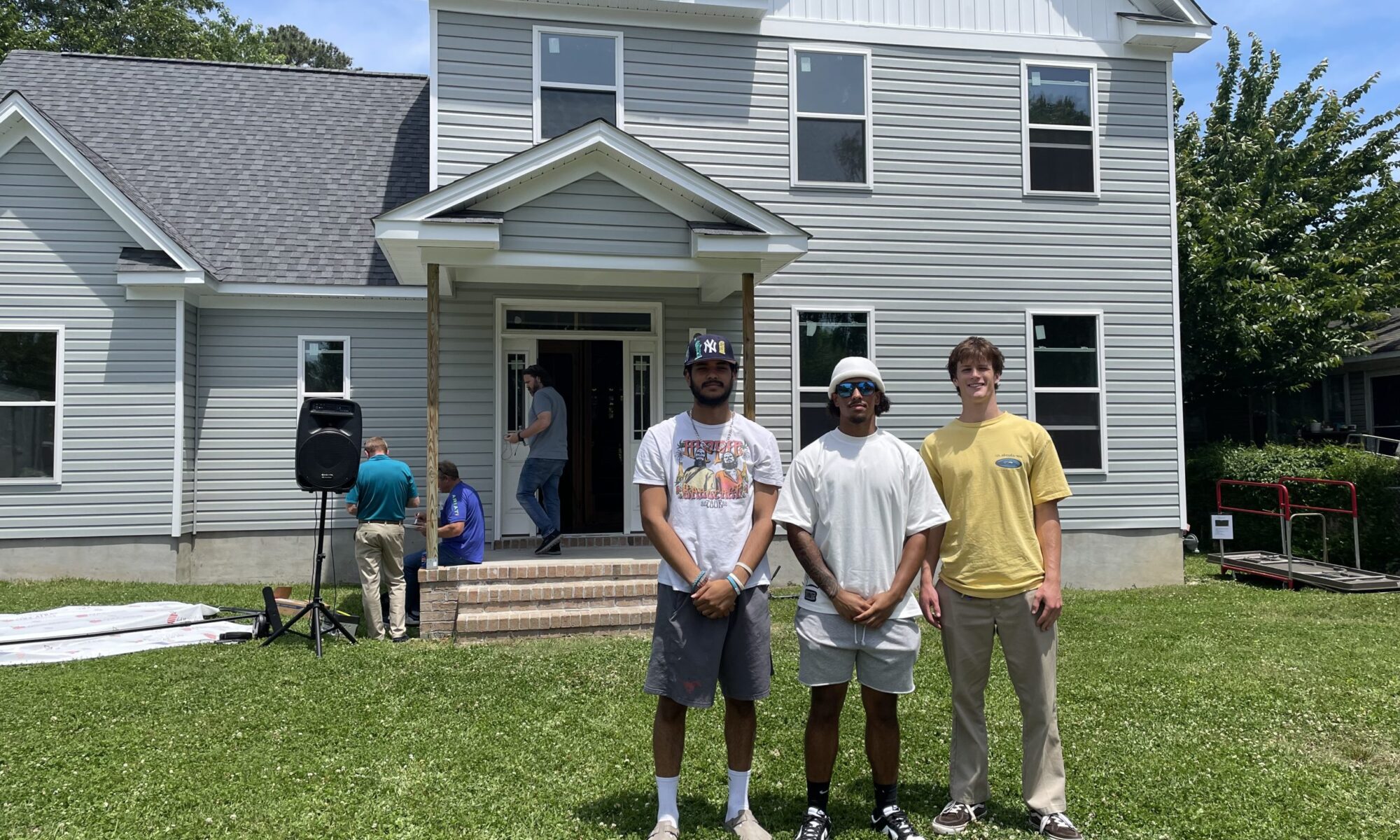
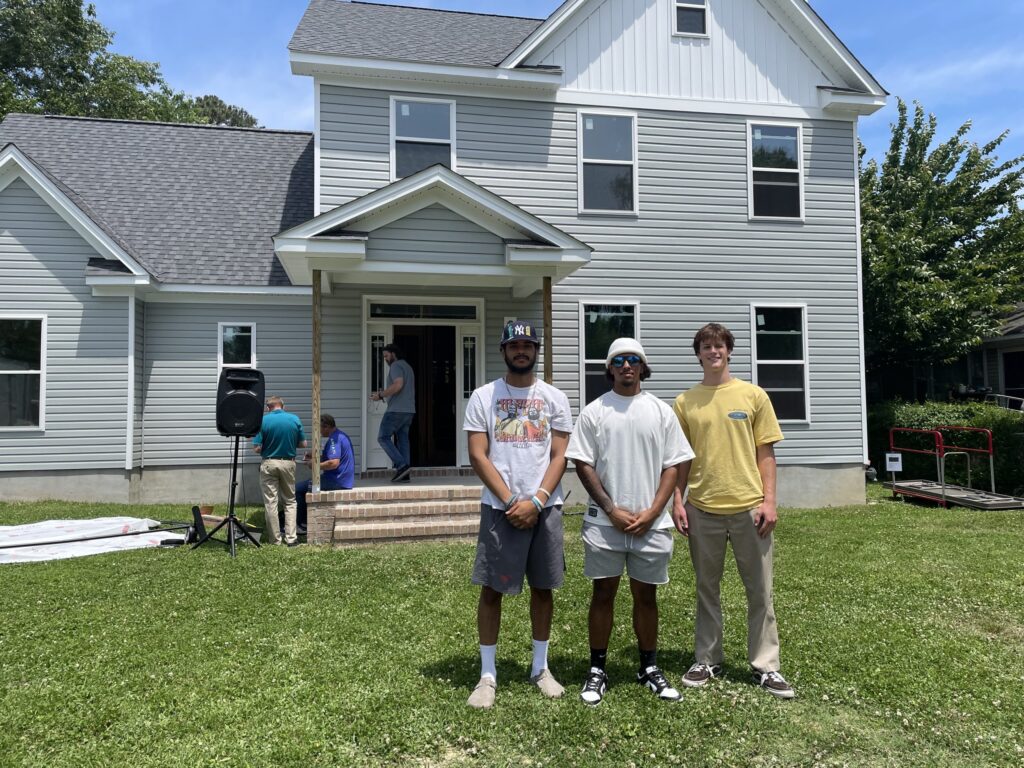
Technical and Career Education Center students were celebrated on May 23 at the home they helped build as part of “The House Students Built” project. From left, Alex Negron, Allen Miller and Lachlan McKinnon
Allen Miller has a plan after he graduates: an apprenticeship in plumbing, pipefitting, and heating, ventilation and air conditioning(HVAC).
The Virginia Beach Technical and Career Education Center student spoke to a group gathered at 1512 Indiana Ave. in Virginia Beach to celebrate the work he and other seniors had put into building the home for the past two years.
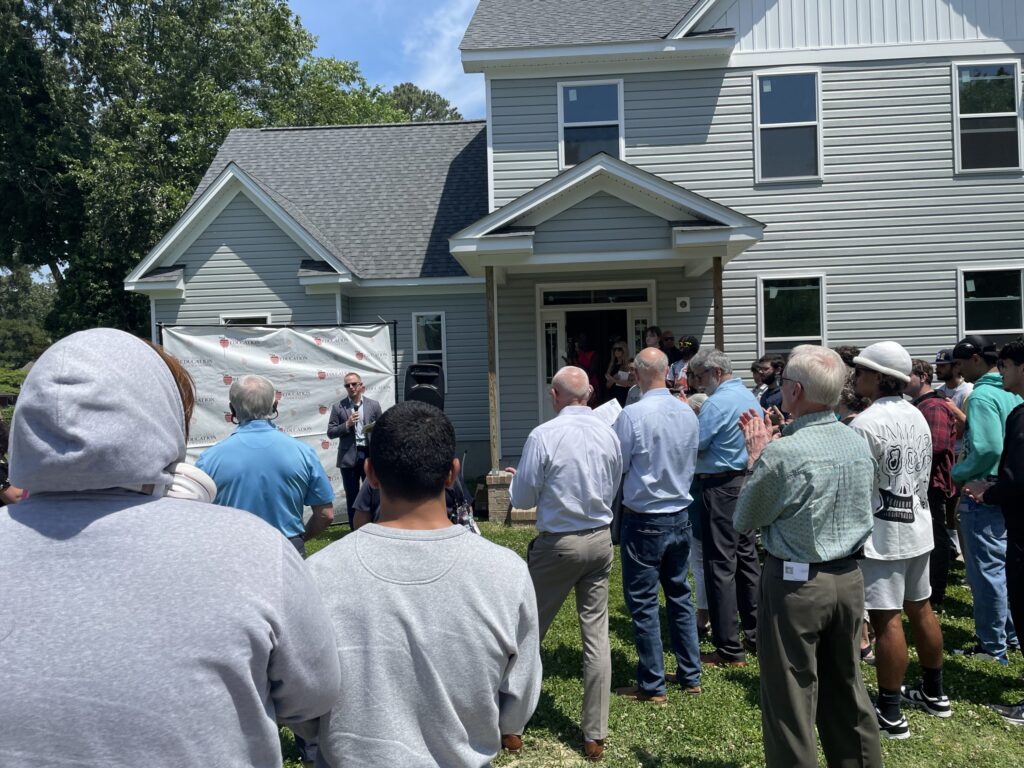
Virginia Beach Education Foundation president Kevin Hill spoke to Technical and Career Education Center seniors and guests during a celebration honoring the students’ work in construction of a house on Indiana Ave. in Virginia Beach. The house will be completed by the end of the year.
He gave a shoutout to the faculty.
“They keep it real to help us get better at our craft,” he said.
Allen said he didn’t know about the opportunity to study carpentry until Technical and Career Education Center counselor Rob Marlin visited his school when he was in eighth grade.
The hands-on training as part of “The House Students Built” project helped him prepare for the future.
“It’s been a blessing,” he said.
At the celebration, Superintendent Dr. Donald Robertson Jr. told seniors that construction companies are hiring. The experience building a house will help them get jobs, he said.
“You have a skill that is desperately needed,” Robertson said.
The barbeque luncheon was a send-off for the more than 60 seniors who helped in the home’s construction. They put their skills to the test in carpentry, electrical, masonry, plumbing, landscaping, plus HVAC.
Special guests toured the home, slated for completion by the end of the year.
School Board member Mike Callan was in attendance. He worked as a framing carpenter years ago before a career in financial services.
He praised the students’ work for precision, accuracy and attention to detail.
“When you walk in, you say ‘Wow!’ ” he said.
More than 60 Technical and Career Education Center seniors were honored on May 23 for their roles in constructing a house on Indiana Ave. in Virginia Beach, slated to be finished by the end of the year and sold to benefit the Virginia Beach Education Foundation.
Aiden Delamar helped wire the home for electricity.
“It was definitely beneficial for my career,” he said.
Jordan Crawford worked in masonry on the house’s back patio.
“I always had an interest in building things and seeing how it all comes together,” she said. Her plan is to study business at a college in upstate New York and get an apprenticeship in construction.
Atraiu Stevens plans to join the Marine Corps after graduation. The carpentry skills learned have been invaluable, he said. “It’s going to help me the rest of my life.”
Carpentry teacher Larry Hinson said students have made community connections.
The goal is to make sure students get employed, enrolled or enlisted.
“Seeing them succeed is really cool, fantastic and rewarding,” he said.
The 2,800 square foot, two story, three bedroom, 2.5 bath home with a two-car garage was also made possible by help from the community through donations of materials and time with an estimated value of $150,000.
Proceeds from the sale of the home will benefit teachers and students through the Virginia Beach Education Foundation.
Since the homebuilding project began in the 1990s, 12 homes have been built, including the one on Indiana Avenue set to be sold later this year. To date, more than $800,000 has been raised to fund teacher grants for innovative classroom projects.
Foundation President Kevin Hill described the collaborative effort between students, teachers and volunteers as “leadership by doing.”
“The training that matters is real-world job applications in the production of this house,” he said.
Tech Center Director David Swanger said giving the students the opportunity to be part of a house construction project prepares them for the future.
“We can take every student in construction and give them a real-world experience,” he said. “It’s amazing.”
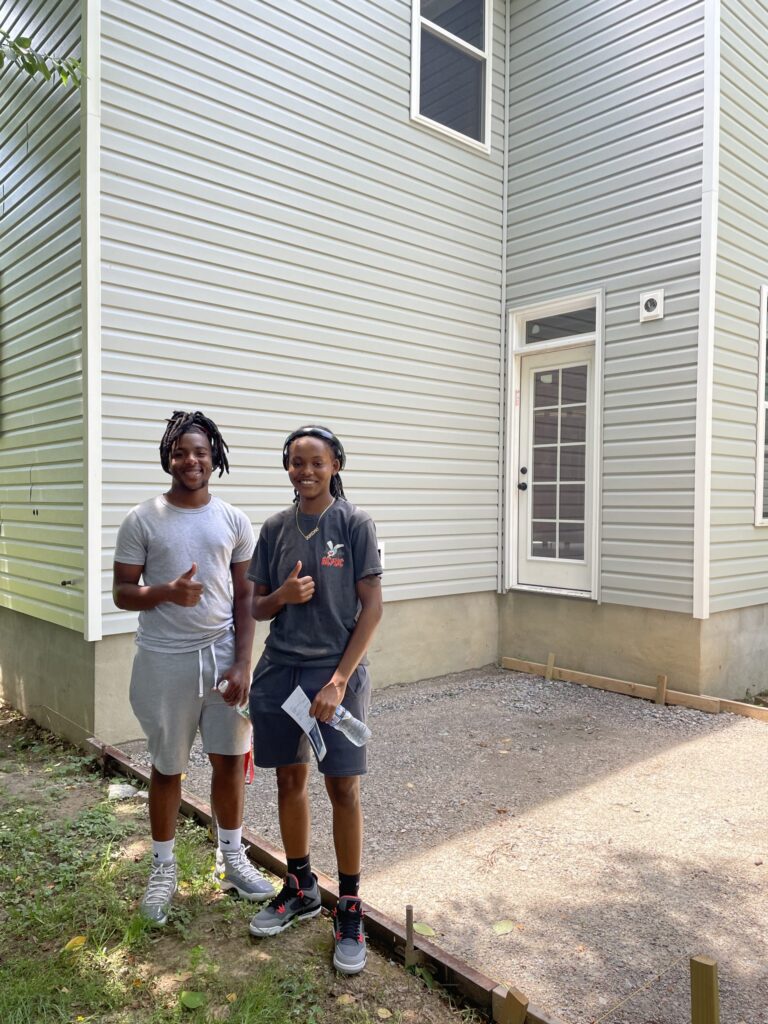
Jordan Crawford, right, used masonry skills to construct a back patio on 1512 Indiana Ave. and Sterling Bolding provided carpentry skills for the house. The Technical and Career Education Center seniors were among more than 60 treated to lunch as a thank you for a job well done working on the home, set to be finished and sold later this year.
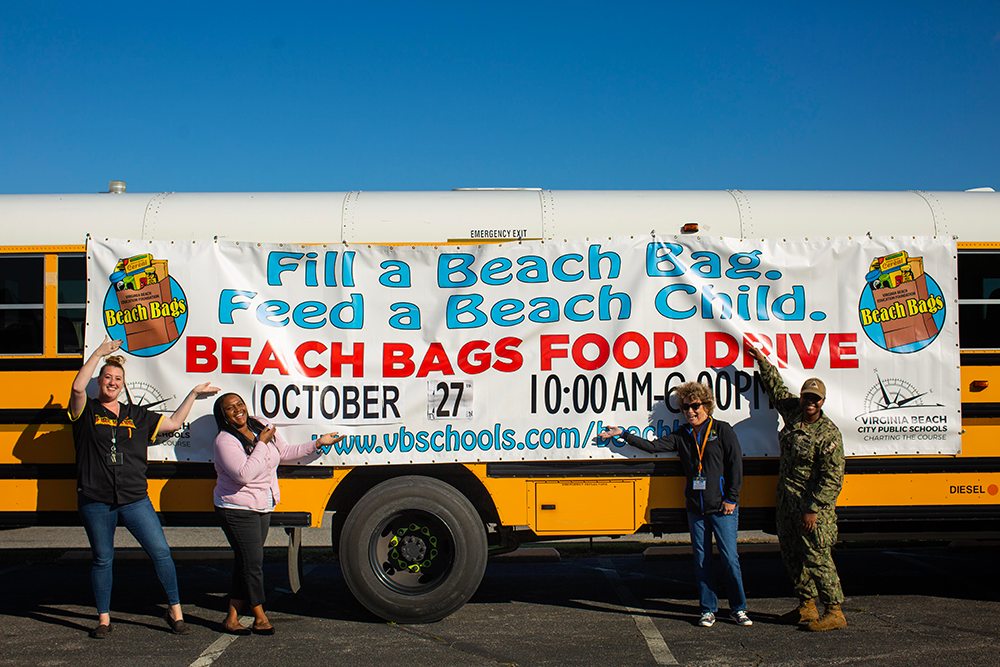
Virginia Beach City Public Schools (VBCPS), in partnership with the Virginia Beach Education Foundation, is hosting the Beach Bag Food Drive and School Supplies event to help students in need.
Collections from the drive will provide meals and snacks to disadvantaged students who may face hunger on the weekends and over school breaks. VBCPS says students who need support are identified by school staff or the Office of School Social Work Services.
A Hampton Roads organization was awarded half a million dollars to make a big difference in the community.
Three Newport News businesses teamed up to create the Accelerating Change Together Grant. This year’s focus was education and workforce development.
The Virginia Beach Education Foundation thought they were just giving a tour of the Advanced Technology Center at Virginia Beach City Public Schools, but instead, 10 On Your Side was there when they got a big surprise!
Science lessons learned: Students discover STEM carnival isn’t just fun and games
By David Schleck
A carnival is about fun and games, yes. But for students at Landstown Governor’s STEM and Technology Academy, carnivals are also about science, technology, engineering, mathematics —with lessons in teamwork and overcoming obstacles.
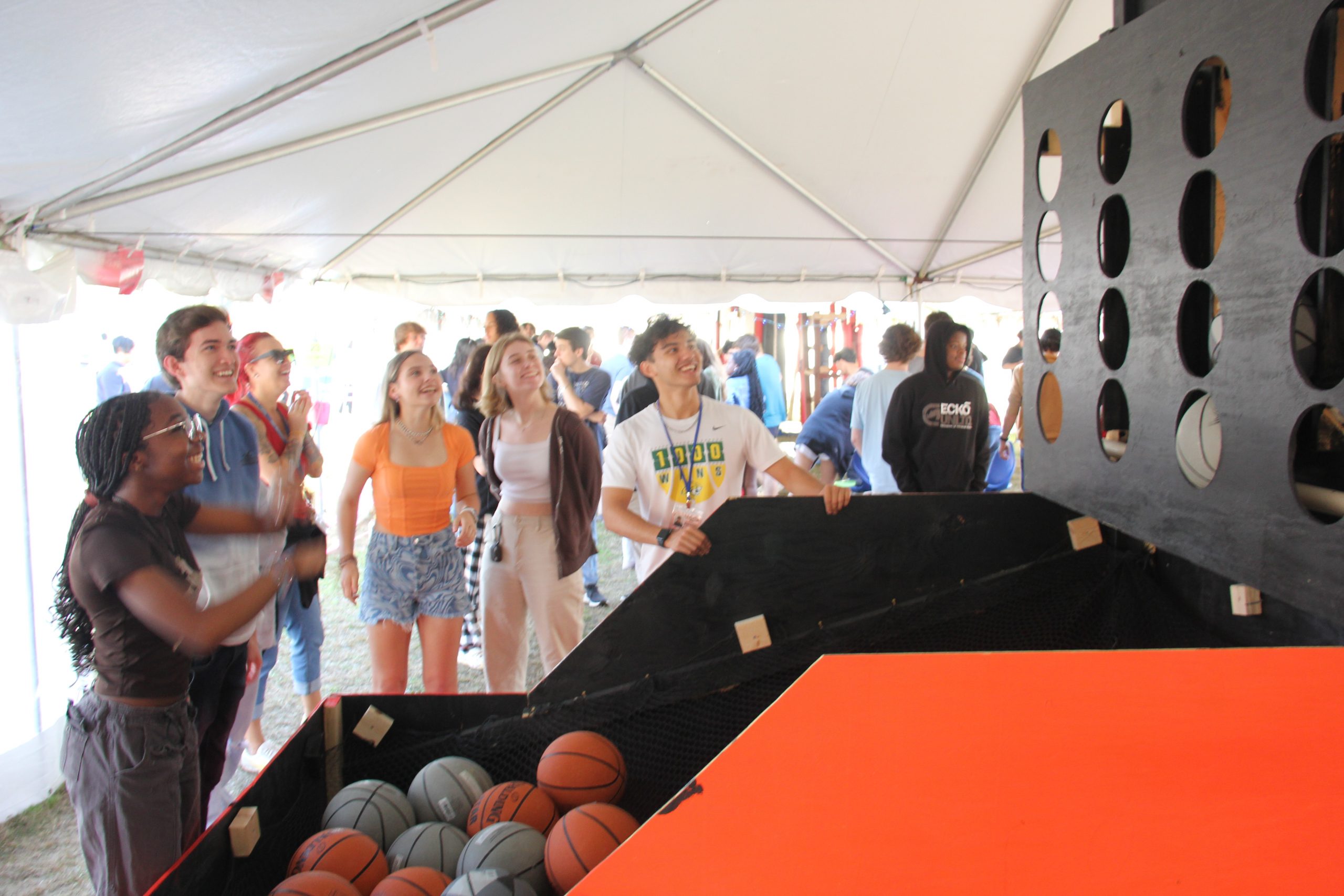
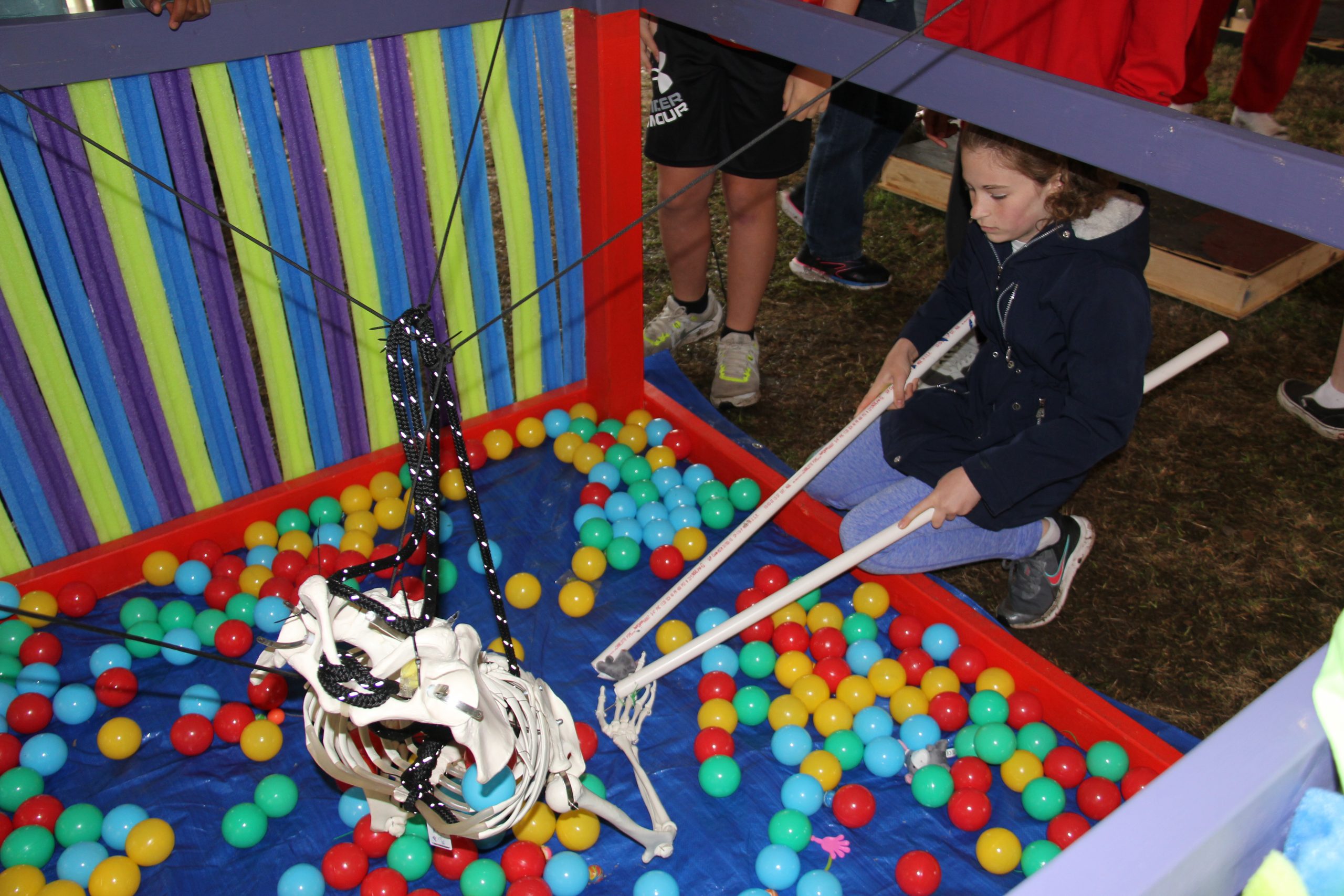
Just before Spring Break, students successfully orchestrated a dayslong event that thrilled hundreds of carnival goers. Students won prizes while playing games and learning about biomedical engineering at the carnival, thanks to a grant from the Virginia Beach Education Foundation.
Explore and analyze human movement.
Help students learn the engineering design process, creating functional products as a team.
Develop real world applications and problem-solving skills while contributing to society
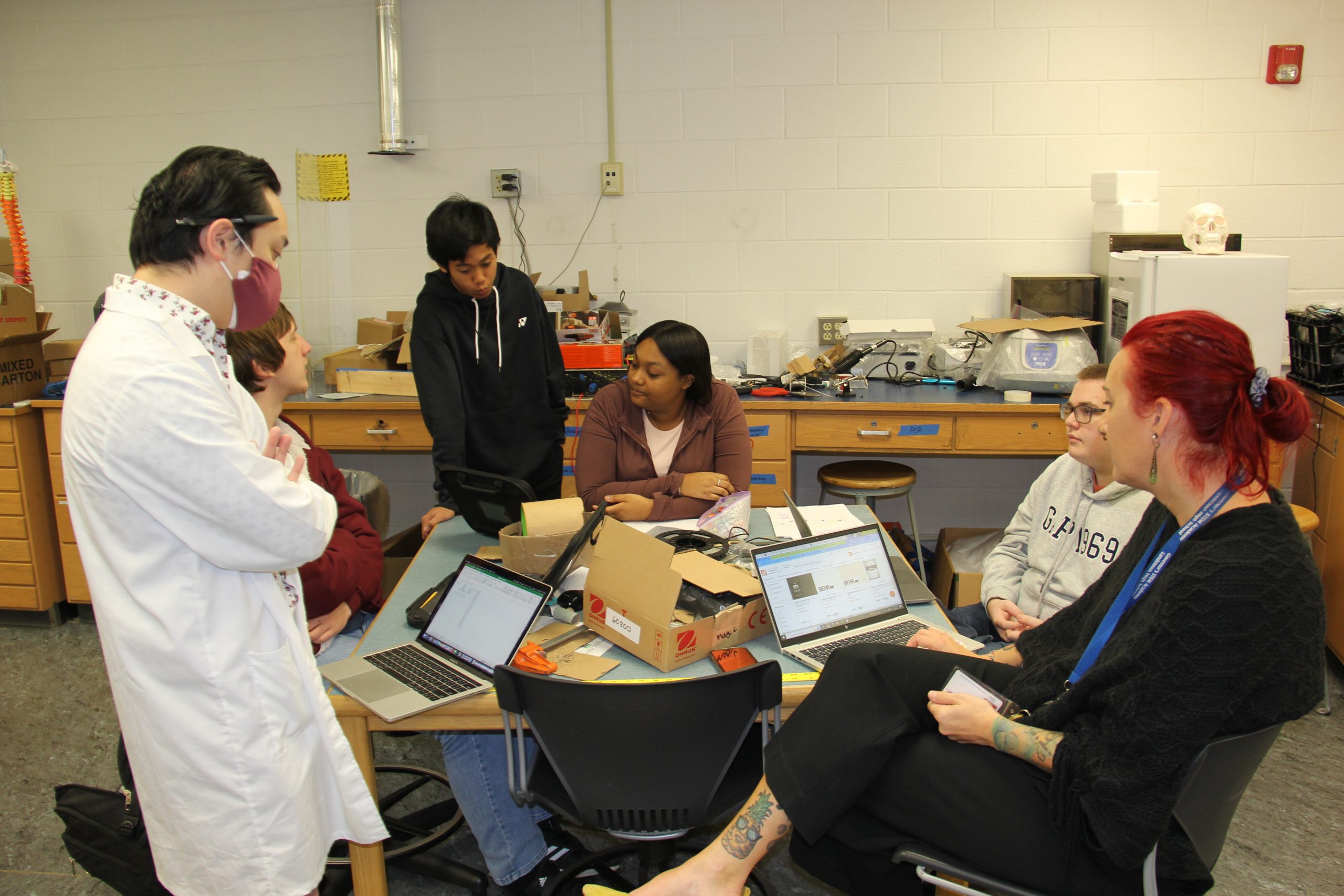
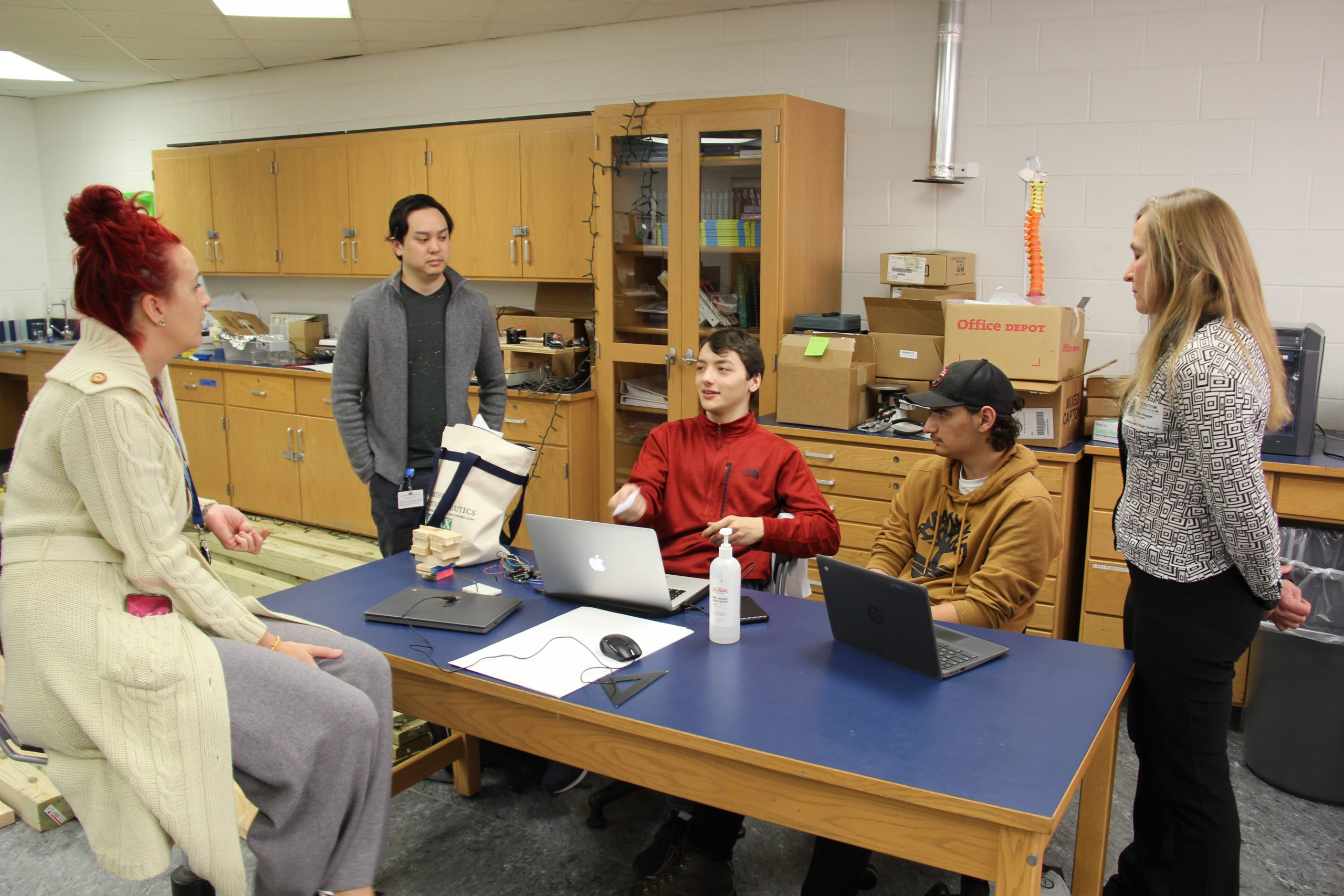
A materials team for the Landstown High STEM carnival discuss paint orders with their instructors (January 2023).
Many of the games collected scientific data on how people perform physical activity and how they can improve upon athletic performance. Seniors taking Biotechnology Foundations were the project managers while juniors in the school’s bioengineering class were the lead designers.
The Birth of Great Ideas
Our story begins in the planning phase.
It’s winter. And Landstown senior Nathan Long wants the carnival to be a topnotch experience for students who attend the event.
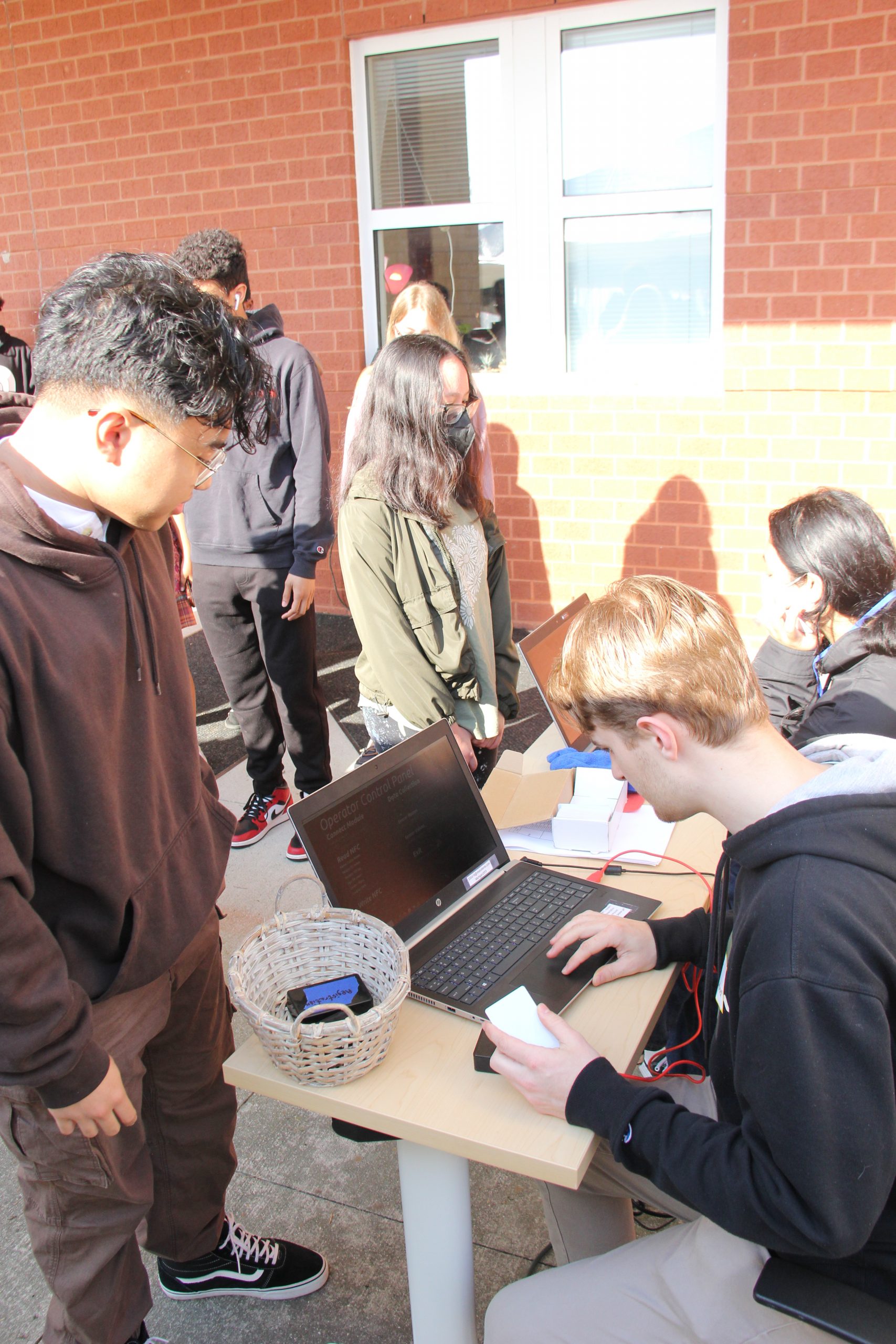
Long is programming data cards that each player will use to track their game points.
“I plan to add a graph that updates in real time,” Nathan says during a work session.
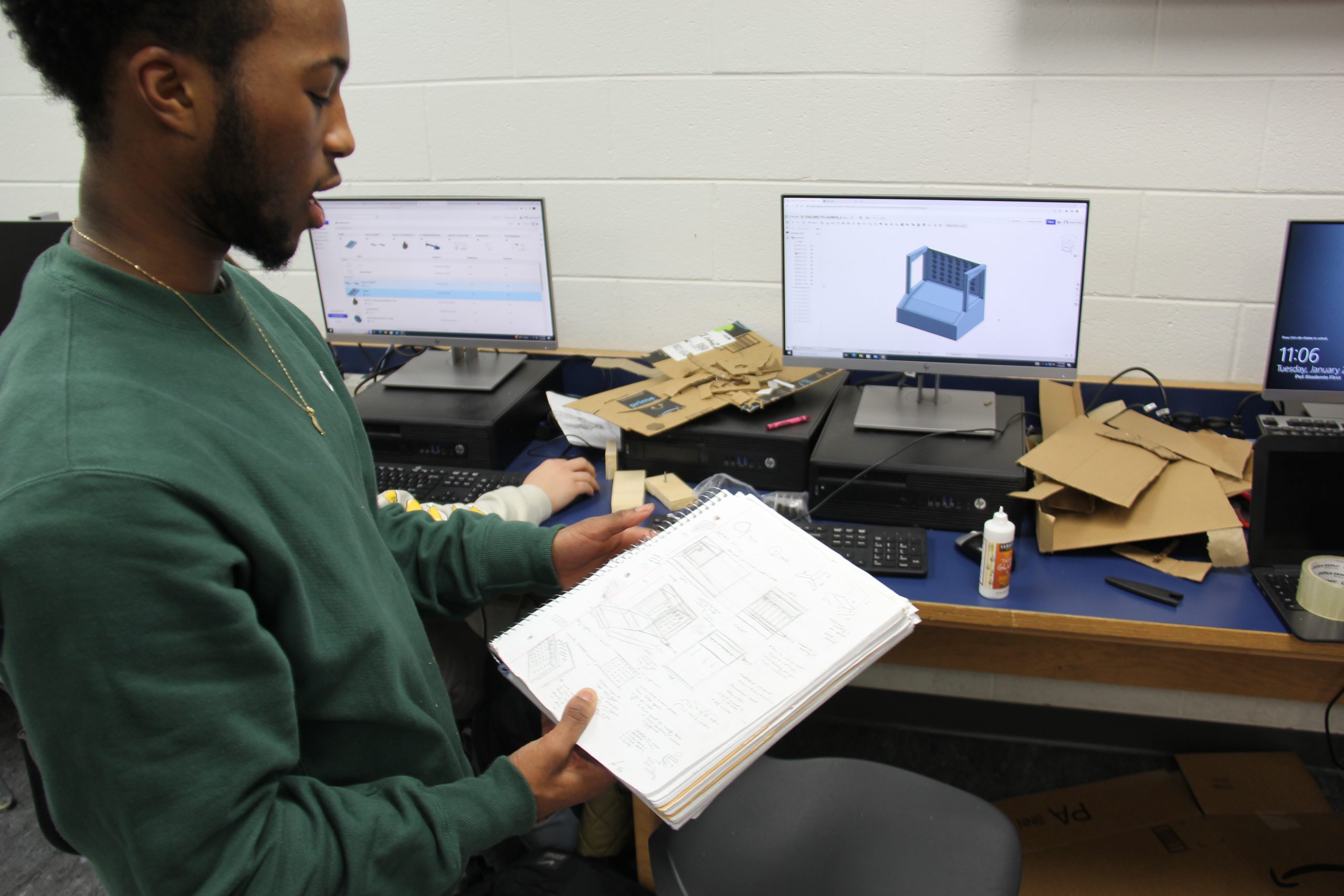
Early planning for the Connect Four game in January 2023.
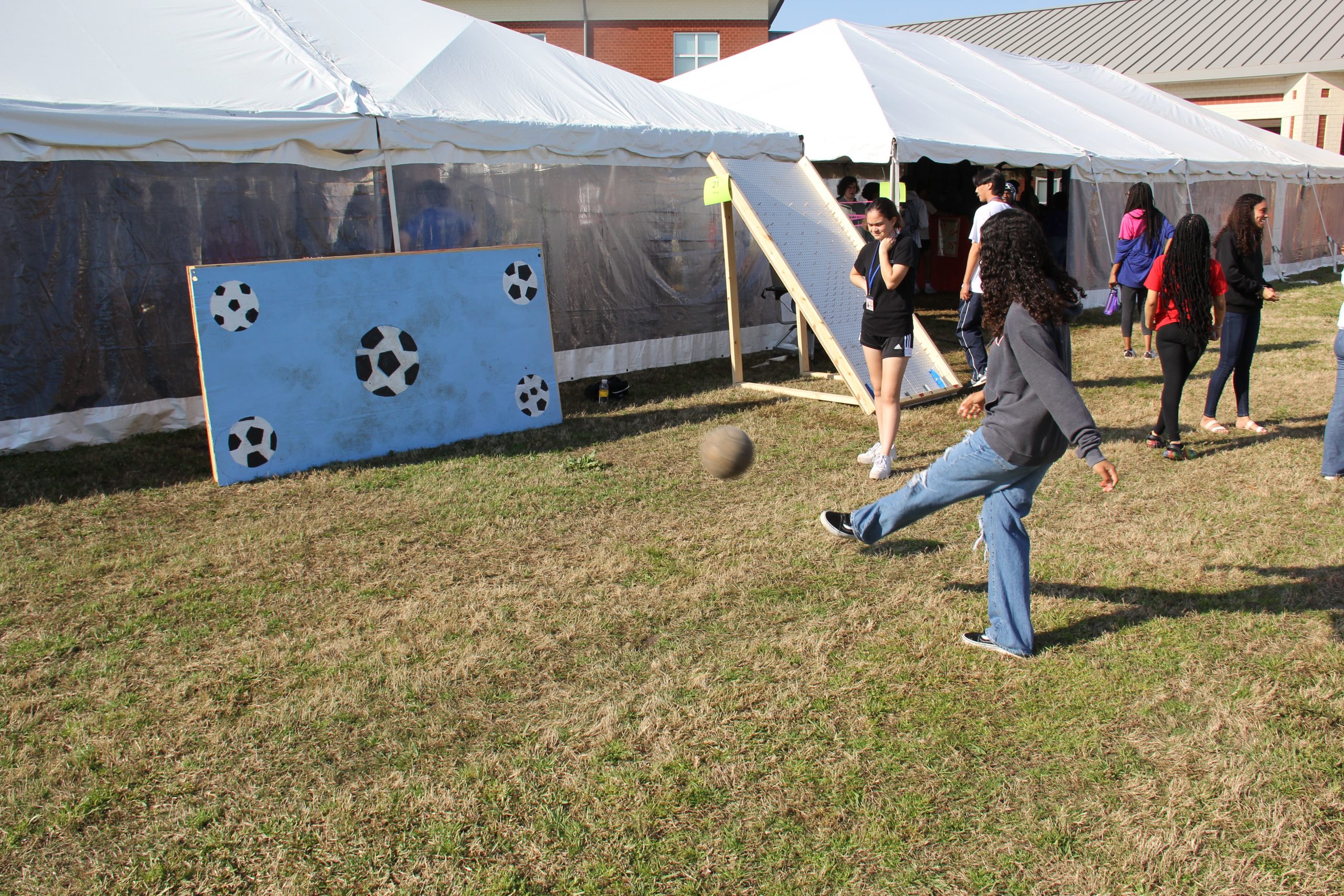
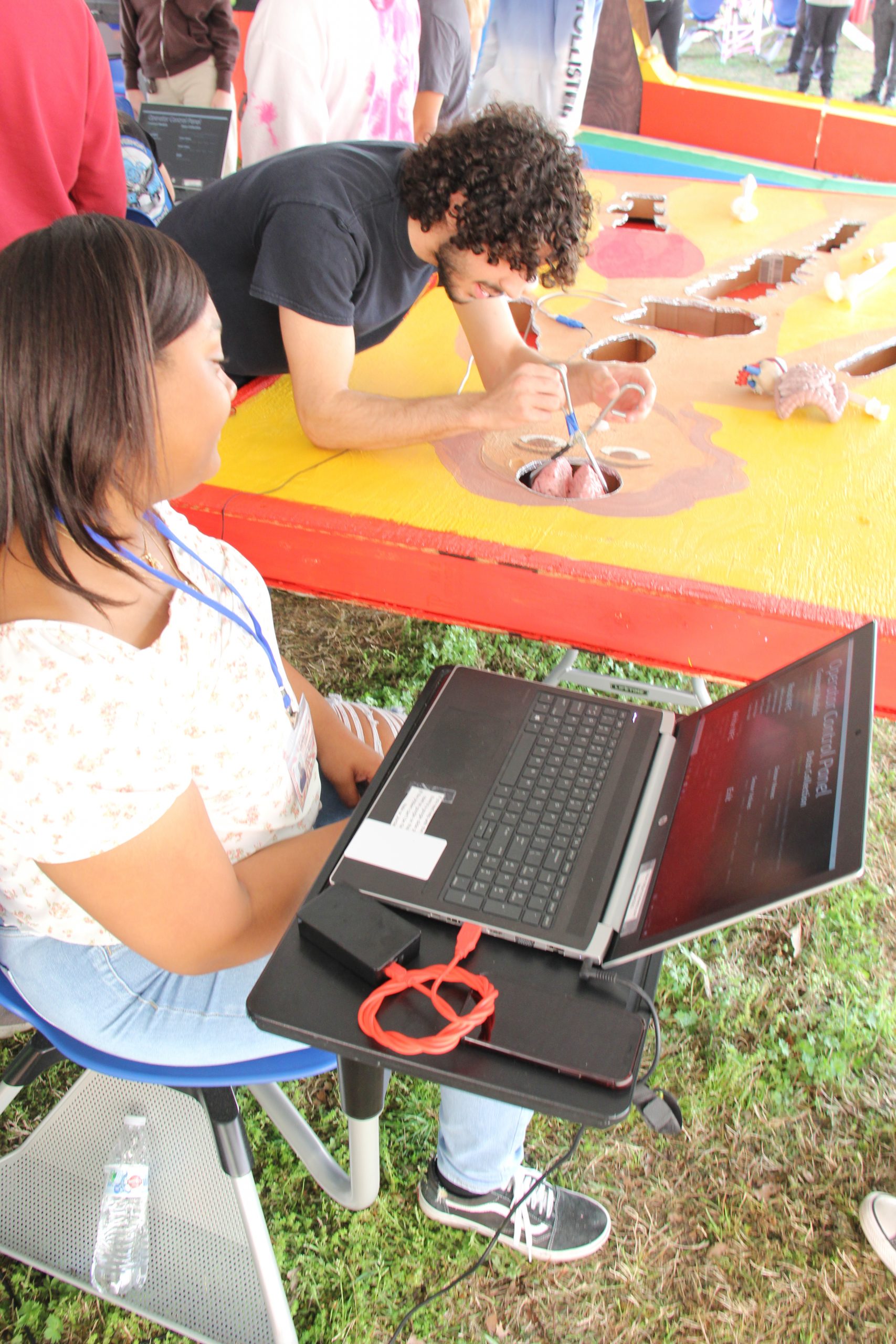
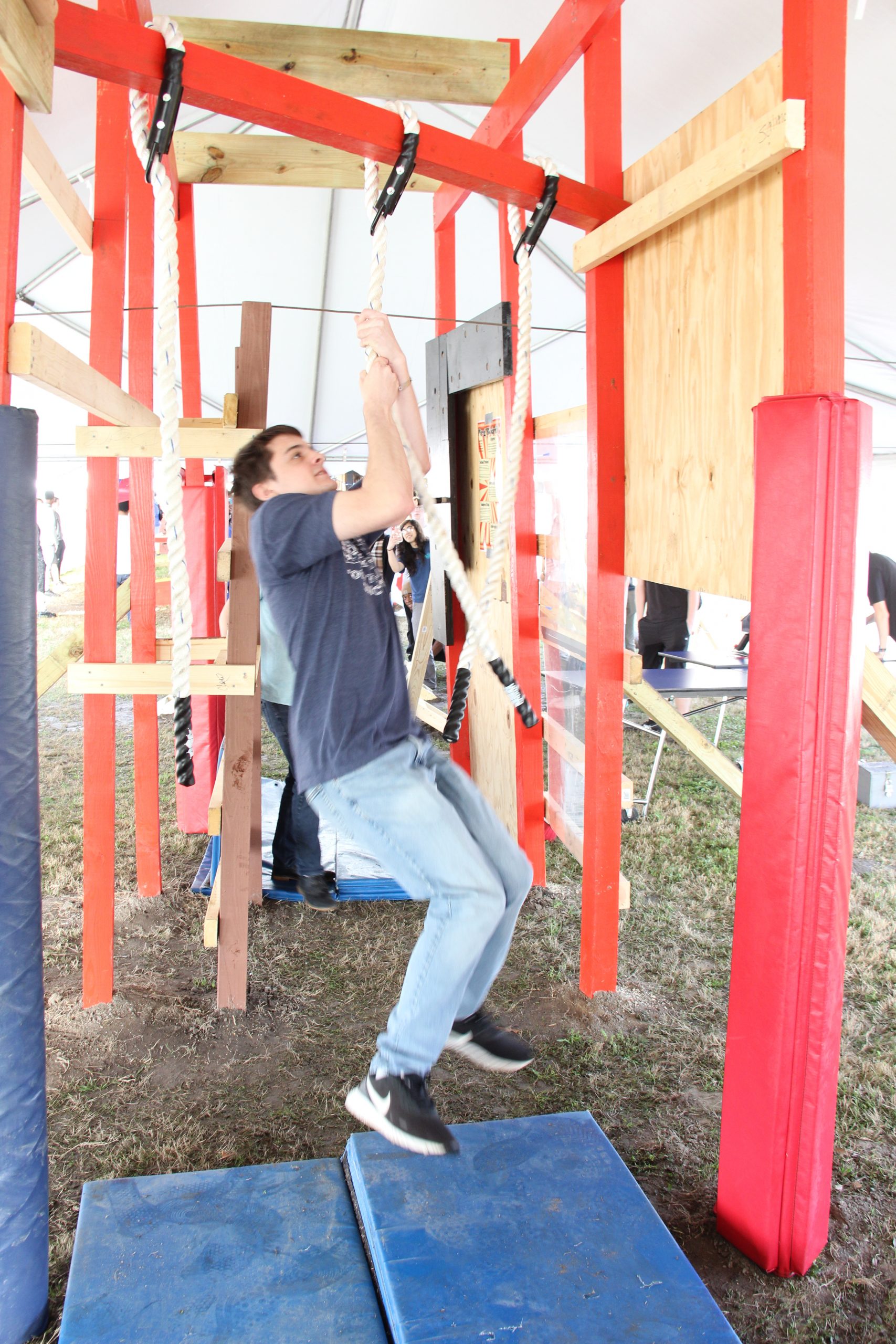
The activities include twists on popular games such as Connect Four and Operation. Posters at each station will describe the science behind the games, some of which use sensors to detect the force placed on their components by the players. For example, the high-jump game will be embedded with load cells to measure the impact when players landed after each leap. For the obstacle course, players will wear electrodes on their arm muscles to measure body movement.
Victoria Sachar-Milosevich, gifted resource specialist, said it’s important for student to come up with their own solutions to the challenges that come up when developing the carnival games.
“We give them a problem, and it’s up to them how to fix it,” she said.
Sachar-Milosevich uses social media to get donations of materials for the carnival, which has a $5,000 budget. As of late January, about $2,000 has been spent. The teachers and students talk about how much money they will need for paint, and how to cut costs by purchasing primary colors and re-using paint brushes.
Can You Hear the Clock Ticking?
Team collaboration continues in February.
Now it’s February, and teams need to start turning the game concepts into reality. Technology education teacher Anthony Le helps keep them on track with tasks such as cutting wood and painting.
“Some things can start getting prepped now,” Le tells the students. “Where is my Connect Four team? We’ve got to finalize your numbers now, because you probably have the most complicated build.”
The carnival isn’t the only subject of study for the students. These young engineers are learning how to make gels used in DNA research, and Nathan recently built a device called an electro-spinner, which helps scientists study microfibers.
Sachar-Milosevich reminds the students there was only six weeks until the carnival tents would be delivered.
“We don’t want to be like last year, when we were painting while the carnival was starting,” she said.
Senior Taylor Wallace said she needed each team’s paint orders order soon. She helped order paint in primary colors to help save money.
Student Collin Steele developed a schematic of the booths within the tents.
“If you give me a task that I can work on for a long time until it’s nice, I will spend all the time I can on it,” he said. When a rainstorm drenches part of the school grounds, the team decides to move the carnival to another location.
Almost Gametime
Spring Break is just around the corner.
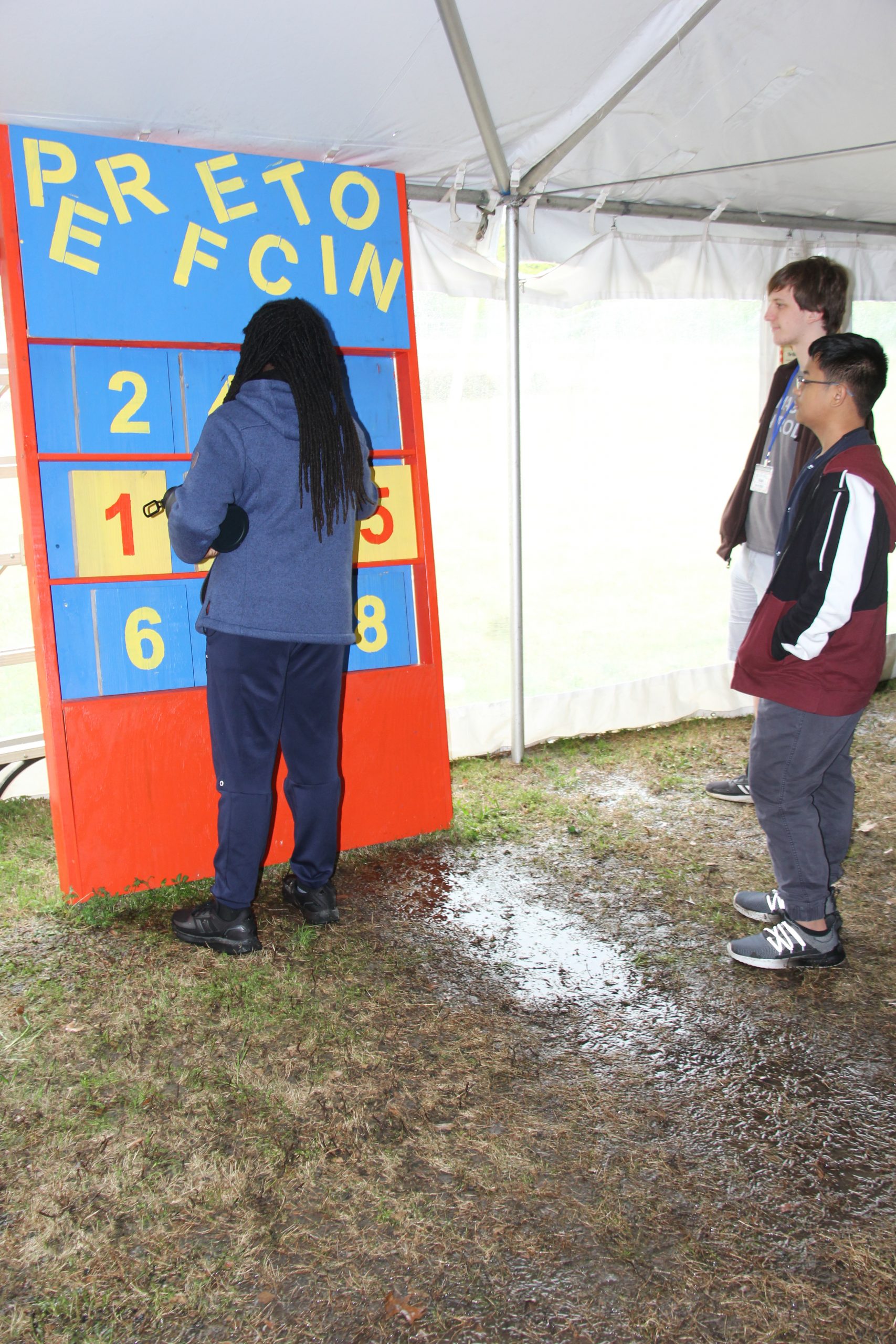
Student Jaden Alston and his teammate Bryan DeSantis-Sparks continue to work on the giant Connect Four game, which uses balls instead of checkers. The challenge is to make the game fun but not too time-consuming.
“It’s a carnival game, so we don’t want it to take too long to play,” Alston says.
After some trial and error, the team decides to turn the Connect Four game into a Connect Three contest similar to tic-tac-tough.
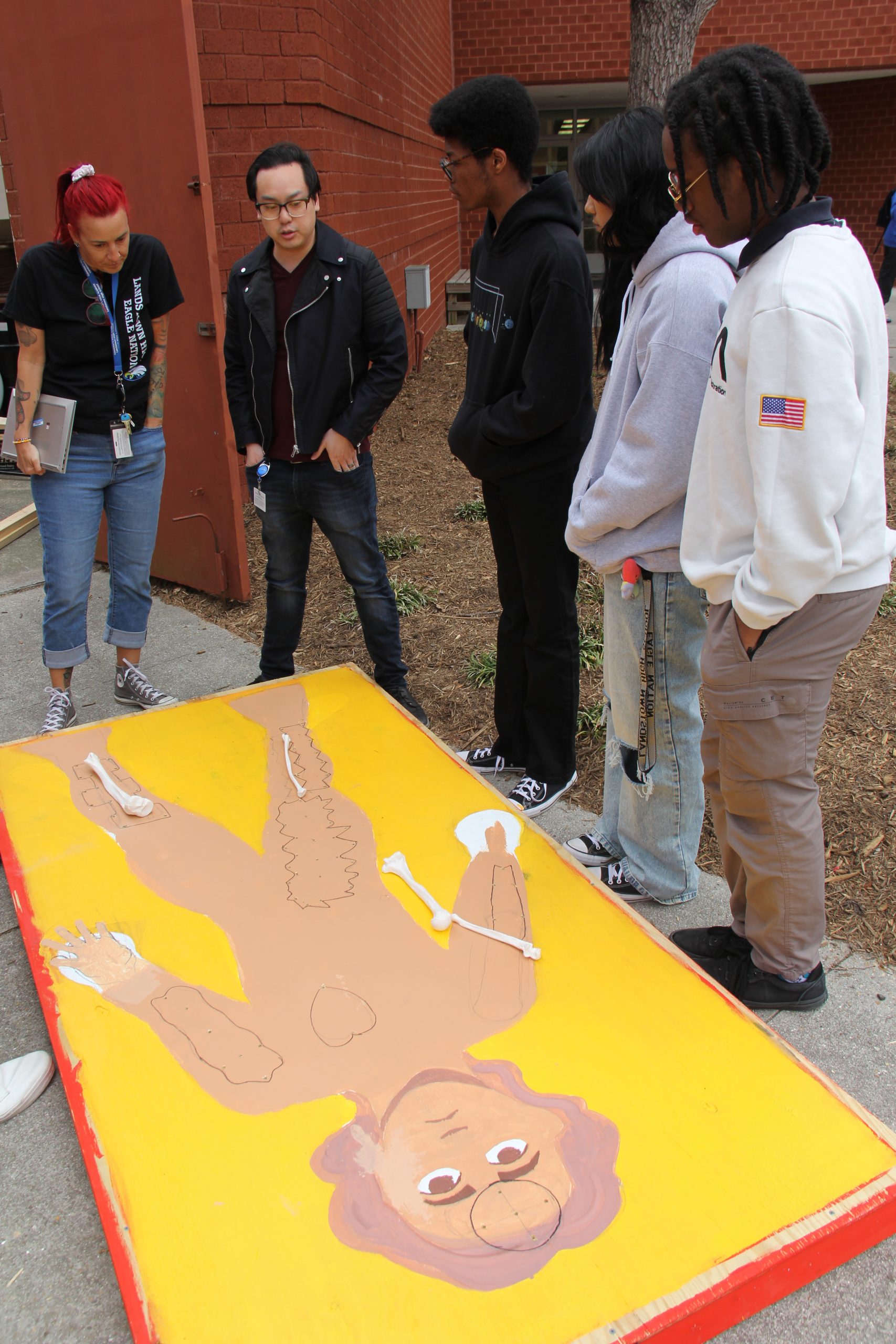
Meanwhile, Steele and Jacqueline “Jack” Mims work on a giant claw machine that will use Gibby, the class skeleton, to help retrieve prizes from a bin.
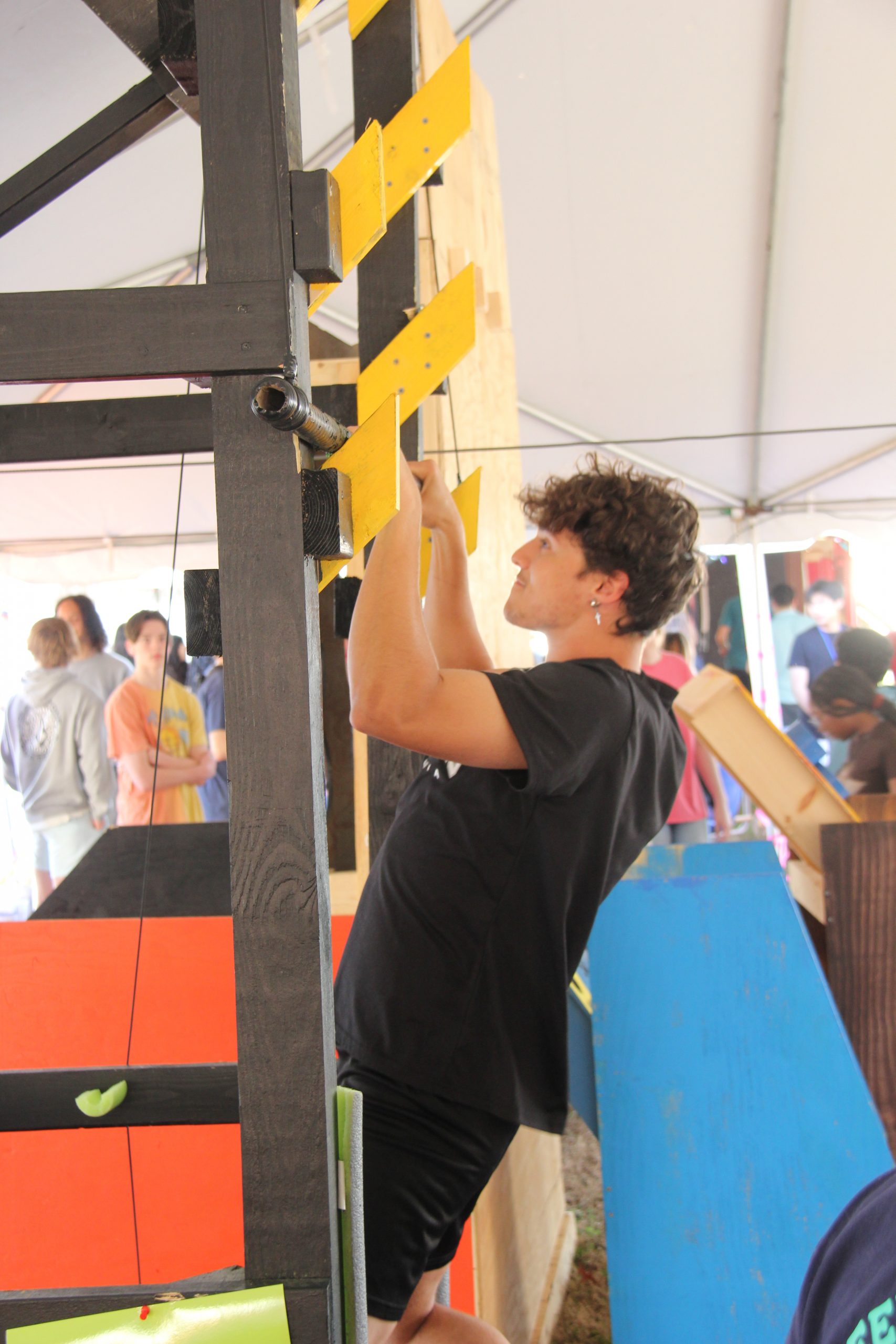
Students Derek Poore-Abad and Jayden Gundran start building a salmon ladder similar to the obstacles found on the popular “American Ninja Warrior” television show.
Construction of the warp wall challenge in March.
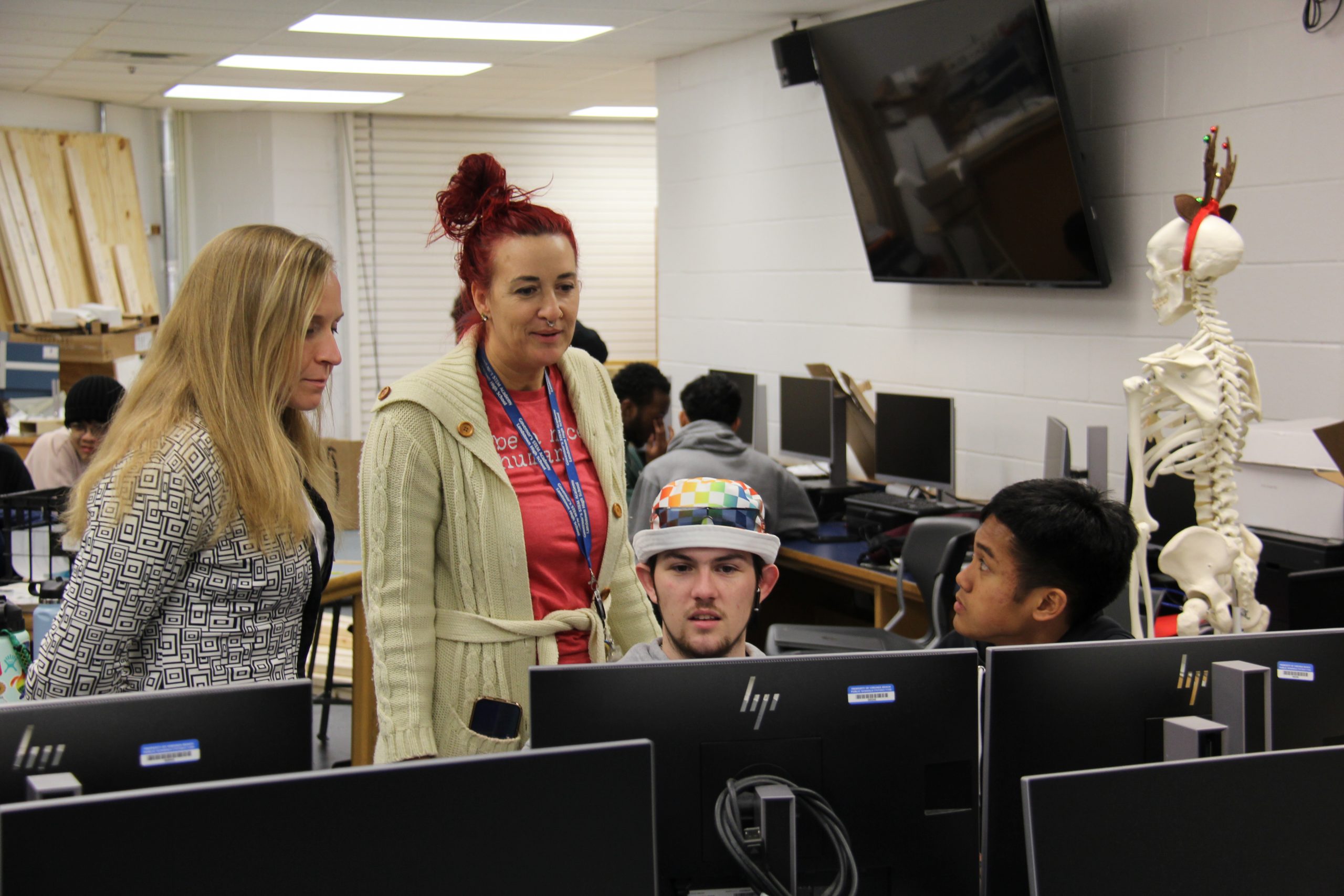
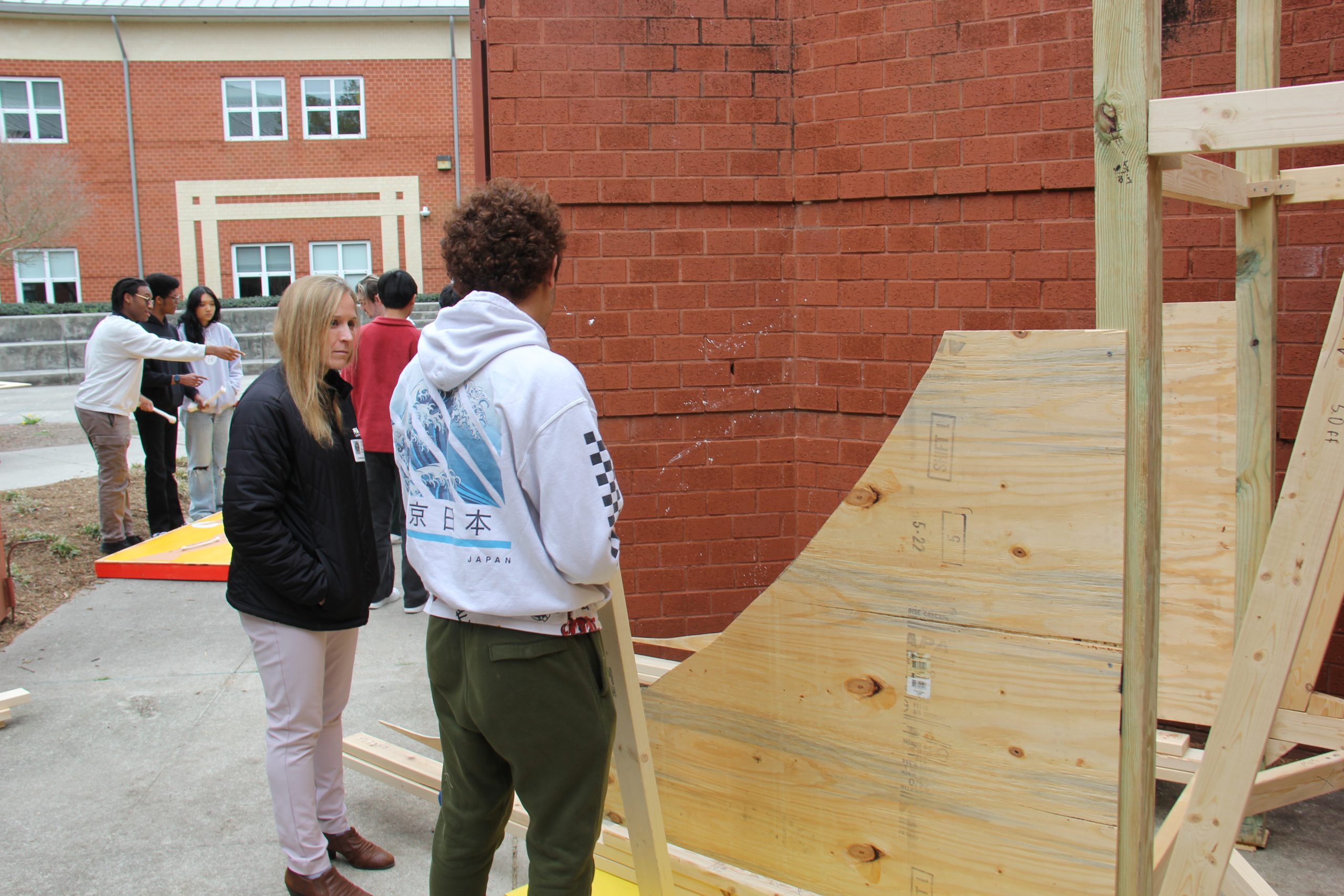
Sara Heppe, an architect with PF&A Design, is one of the community partners working with students on their designs. She talks with them about where to best place two-by-fours to ensure stability and maximize structural capacity. The discussion included terms like hurricane clips, cross bracing and lateral stability.
“You can develop whatever you want on the computer,” Heppe said. “But when it comes to physical material restrictions, you may have to change your dimensions.”
It’s three weeks before the carnival and things are taking shape. Students are asking all sorts of questions about permission slips, prizes, setup and takedown, badges and safety.
Heppe continues to help students understand architectural concepts. For example, the “warped wall” obstacle needs to bear the force of students running at it and then up it, and those athletes need a ladder to get down from the top of the ramp when they’re done.
“Some railings at the top of the ramp would also be a good idea,” she said.
The life-size Operation game isn’t going perfectly. Space for the leg bones have already been cut out, but the game’s proportions are no longer anatomically correct.
“The intestines are going to be much higher than they should be,” Le tells the students. But the team agrees that the game will still be fun, despite it all.
Under the big top
A week before the carnival, students and teachers assemble two large tents in front of the school. They are still painting and piecing together some of the larger carnival games.
“This is really crunch time,” Sachar-Milosevich says.
Last minute adjustments are made, such as adding a backboard to the Connect Three game.
The carnival begins, and scores of Landstown students line up to check into the carnival and receive their game cards.
Steele was one of several students explaining to visitors how the carnival was more than fun and games.
“We’re studying the human body and different ways it deals with obstacles,” he said.
The Connect Three game proves itself as the most engaging attraction, with teachers sometimes taking on their students as opposing fans cheered behind them. A local news station captures the fun while interviewing students.
A sense of relief settles in. Senior Devyn Martz realizes how well everything is going. They’ve built these games from scratch, and all the components have survived.
“I’m happy that nothing broke,” Martz says. “Everything is still standing. We thought about safety when we were building everything, and it paid off. “
Heavy rains hit the carnival on its last day. Students pulled some outdoor games inside, but the rainwater seeped inside the tent, creating mushy puddles everywhere. No one seemed to care, though. It was the last day before Spring Break, and middle school students seemed happy to out of class playing games with high schoolers.
“It’s a little soggy and my socks are wet,” says junior Tyrel Rivers, “but we’re still having fun. I’ve gotten to know my classmates so much better through all this.”
Additional community partners for Landstown’s STEM Carnival are Mark Nelson, chief Engineer at Lockheed Martin; Len “Shrop” Shropshire, of Booz Allen Hamilton, and the Hampton Roads chapter of the Society for American Military Engineers, which provided representatives and resources.